Writing
Running Notes — March
March running diary—Lantern Festival moon viewing, Xiangling learning poetry, Wang Guowei on aesthetic realms, and 'A crane's shadow crosses the cold pond.'
3-1
Life eventually settles, like running—the initial passion fades and the mind grows calmer, like water on a lake; ripples from a thrown stone eventually flatten.
Tomorrow is the Lantern Festival; ancients had the custom of moon viewing on this night. Today I played basketball late—could not see the hoop, but behind it rose a full moon. I was stirred—that was the largest moon I had seen in two months of running; no wonder ancients moon-gazed on this festival.
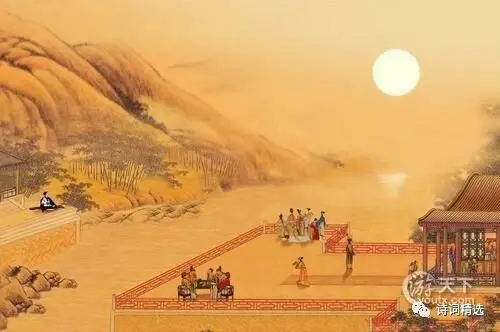
Dream of the Red Chamber has a wonderful passage on moon viewing:
Grandmother Jia said, “Moon viewing is best on the mountain.” She ordered everyone to the hall on the ridge, named Convex Green Mountain Villa for its high position.
Shi Xiangyun disagreed. She smiled at Daiyu: “Moon viewing on the mountain is fine, but moon viewing near water is finer. Below this slope is the pond edge; in the hollow near water is Concave Crystal Pavilion. When they built this garden they had art—high places called Convex Green, low wet places Concave Crystal. One up, one down; one bright, one dark; one high, one low; mountain and water—built for enjoying the moon. Those who love ‘high mountain, small moon’ go up; those who love ‘bright moon, clear waves’ come here.”
The two sat on bamboo stools. Truly—a bright moon in the sky, a water moon in the pool, competing in splendor, as if inside a crystal palace. A breeze passed; the pond rippled with jade patterns—truly refreshing.
Such beauty can only be grasped with closed eyes. Scenery is only part; the two women’s linked verses are the highlight, culminating in the immortal line: “A crane’s shadow crosses the cold pond; the cold moon buries the soul of flowers.” We are not Daiyu, yet we all love her, cherish her, pity her. That is the “cord of time and space” mentioned in Your Name.
3-2
A festival day, yet calm as water. Ran late; the moon had risen higher. Compared with yesterday’s moon just above the horizon, there was an illusion of climbing straight up, which brought two lines to mind:
A lone smoke plume rises straight in the desert; the long river holds a round setting sun.
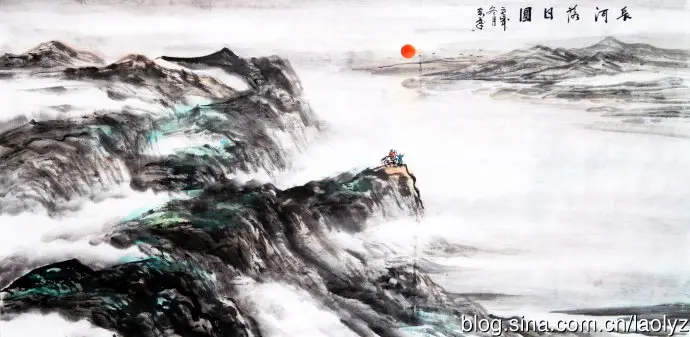
Those two lines led me to Xiangling’s feelings when learning poetry—truly unforgettable. The original:
Xiangling laughed: “I read his ‘Frontier’ poem—that couplet: ‘A lone smoke plume rises straight in the desert; the long river holds a round setting sun.’ How can smoke be ‘straight’? The sun is naturally round—the word ‘straight’ seems unreasonable, ‘round’ seems too plain. Close the book and think—it is as if you saw the scene. Try to replace those two words—you cannot find any. And ‘At sunset the river is white; when tide comes heaven and earth are green’—‘white’ and ‘green’ also seem unreasonable, yet only those words suffice; spoken aloud they feel like olives weighing thousands of pounds. And ‘Remaining sun at the crossing; lone smoke rising in the village’—how did he think of ‘remaining’ and ‘rising’!”
“The year we went up to the capital, that evening we moored the boat. No one on shore, only a few trees; a few households far off making supper—that smoke was jade-green, rising straight into the clouds. Last night when I read these two lines, it was as if I were there again.”
Thinking of Xiangling’s story coming to the capital moves one to pity; yet she speaks like this—more sympathy and sighing.
3-3
Light rain, light breeze, tender shoots mingling with the fragrance of earth—the first spring rain, perhaps. Watched Detective Chinatown 2; Tang Ren finds the final boss with a “dragon-finding rod,” which stirred my fatalist thoughts again. Legends and stories about superstition in our eyes fascinate and enchant. Perhaps your story was written long ago; choosing to believe superstition is only one path to your ending—even if you do not believe, you still move toward your ending until you reach it. That is “all roads lead to Rome.”
3-4
After rain, some low spots on the road hold water; distant streetlight glows on them, glittering. I remember early-morning reading as a child—I lost a flashlight and dared not tell home. The next morning, after rain the night before, puddles in moonlight also glittered. Luckily the teacher had said bright patches are water, dark patches are solid road—my shoes stayed dry walking to school.
3-6
Cold wind, no moon. After the run I sorted old notes—mostly college essays. One line was especially good; Baidu told me it is Li Shangyin:
Do not let spring heart compete with flowers; an inch of longing is an inch of ash.
Spring has come; the heart opens like a flower, yet longing turns to ash—a sharp contrast. Beautiful things always fade; that is tragic beauty.
3-7
Two full months.
3-8
Still no moonlight, but a few stars visible. Mind calm as water—nothing to say. Enough.
3-9
Everyone is a raindrop—falling from the sky, merging into rivers, flowing to the sea, finally reuniting with kin.
3-10
No wind, heavy fog, streetlights unlit. Passing a power room, “squeak squeak” inside, darkness ahead—a gloomy feeling, like scenes from The Shining; heart raced. Then I thought—as a child I went through this countless times alone at home playing until dark, mother not back, going out alone to find her. No streetlights then either; to hide fear I ran while shouting “Mom, Mom…“
3-12
Spring breeze warm on the face—without noticing, winter is gone.
3-14
Wang Guowei said “Picking chrysanthemums by the eastern fence, I leisurely gaze at the southern mountain” is the realm without self. Literally it is clearly “I” at leisure. By his understanding of the realm with self:
In the realm with self, I observe things, so things bear my color. In the realm without self, things observe things, so one does not know which is self, which is thing. Ancients mostly wrote the realm with self, yet the realm without self is possible—for heroes who can stand on their own.
By that reading, should this not be the realm with self? How then is it without self? Now I know—he later mentioned “distance”: when the poet wrote, he had already withdrawn himself, using a surface “with self” to reach a state without self. That is a strand of traditional thought.
3-15
On realms again. Poetry has realms with and without self; so do conduct and life. Most of us live in the realm with self—seeing things through ourselves, seeing people through our own tint, then judging and commenting. Those seen feel misunderstood, then anger, depression, sleeplessness, even madness—the myriad forms of living beings. A small few awaken completely, transcend the mundane—preaching, retreating behind closed doors, wandering the world—that is the so-called realm without self.
3-16
When you lose everything, you understand yourself—and learn to cherish.
3-18
A while ago running without moonlight; streetlights were off for some reason. I tripped on something, nearly fell. Since then, every time I pass that spot I remember the trip and give it a wide berth. That made me think of myself—I ought to experience many such stumbles now. I am sensitive; once I err I remember seriously and rarely repeat the same mistake.
3-19
Still no moon, somewhat chilly. Unnamed flowers along the road have bloomed. Came back to write and lost track of time until now.
3-22
Scattered cold stars, moon like a sickle. After so many days of running, insight grows—after a stretch the body feels coordinated as never before; stride rhythm and breath rhythm merge—wonderful, pleasant, and the initial exhaustion is gone. From antiquity to now, great and small affairs, joys and sorrows, political events—too many; one’s own affairs are tiny. I should learn to listen to stories and love listening to stories.
3-27
Weather improved; two-plus hours of basketball daily counts as exercise. Yesterday an emergency—a man of 32 died suddenly of acute illness, leaving a wife from Guangxi and two young children. Strangers, yet a few meters away he collapsed before my eyes. Life is impermanent, small as an ant; youth fades like this brief spring. Merely surviving is the greatest grace.
3-28
Spring has come; flowers in full bloom. I just read Renjian Cihua on several spring poems—beautiful. Excerpt:
Year after year in the Golden Valley, who owns the wild spring colors? Where flowers fall, ground and mist are one. Pear blossoms gone, spring ends again. Setting sun on the ground, emerald and smoke aging. Alone by the railing in spring—clear blue far joining clouds. Fine rain wets flowing light; fragrant grass year after year with long regret. When will spring flowers and autumn moon end—how much of the past is known? Last night east wind again in the small tower—under the bright moon I cannot bear to look back at the old country.