Writing
Machine Learning (1) — Introductory Overview
Definitions, supervised and unsupervised learning, models, workflow, and evaluation metrics.
Preface: A summary in my own understanding—machine learning definitions and key evaluation concepts.
Definition
-
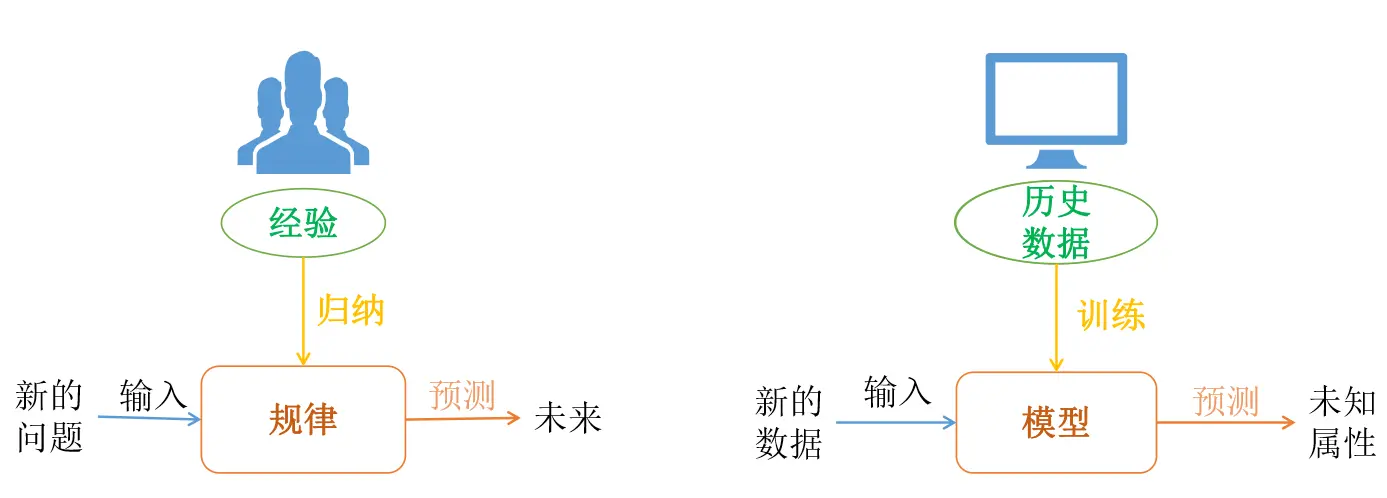
Machine learning studies algorithms from data: choose algorithms from existing data, build models, predict the future. ML is a family of algorithms mining patterns from history for prediction or classification—finding a function from samples to desired outputs, too complex to write explicitly. The goal is generalization to new samples, not only training fit. 1. Algorithms from data Like human learning—pick melons by color, sound, stem—experience predicts new cases. In computers “experience” is data; learning algorithms build models from data.
 2. ML categories
 -
Supervised learning:
-
Discrete targets—melon quality → “good” or “bad” → classification.
-
Continuous targets—price from appearance → regression.
-
Unsupervised learning: no target labels—cluster samples with similar features (covered later).
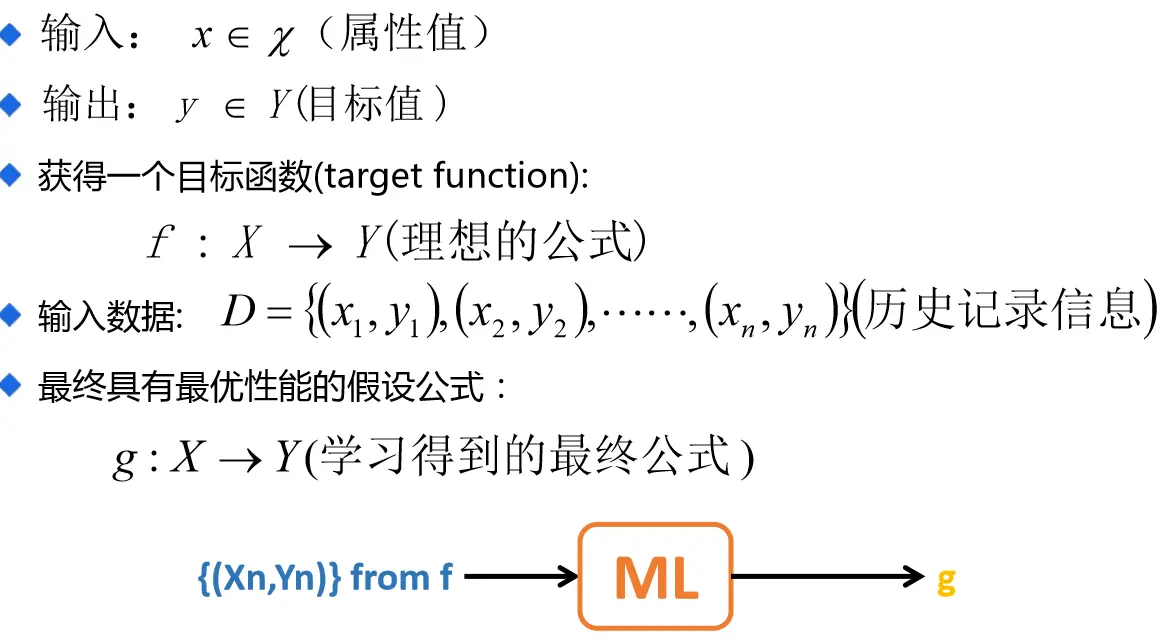
- Models ML algorithms learn hypothesis g close to true f. Algorithm (T): chosen formula for business and features. Model (E): built from data and T; split history into train and test.
- ML process

- How to evaluate algorithms?
-
Robustness: strong on normal data; may fit outliers too.
-
Training issues: 1> Underfitting—learn more; add features. 2> Overfitting—great on train, poor on real data; regularization, early stop, layer-wise normalization. More data often beats a fancier model.
Workflow
-
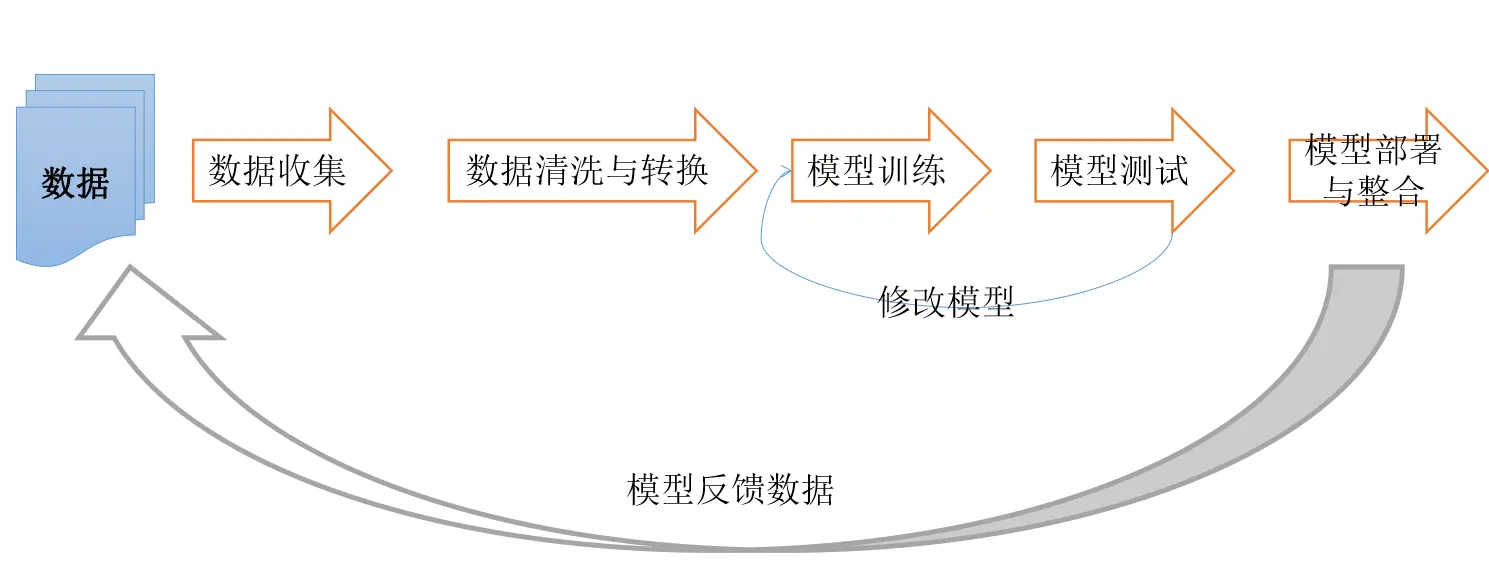
Data collection—first step from traditional industry to ML
-
Data cleaning—features as numeric inputs; filter, impute, fix errors/outliers, merge sources, aggregate
-
Model training
-
Model testing
-
Model selection Compare accuracy, recall, precision, F1: 1 Accuracy = correct / total 2 Recall = correct positives / true positives 3 Precision = correct positives / predicted positives 4 F1 = 2·Precision·Recall / (Precision+Recall) 5 ROC curve
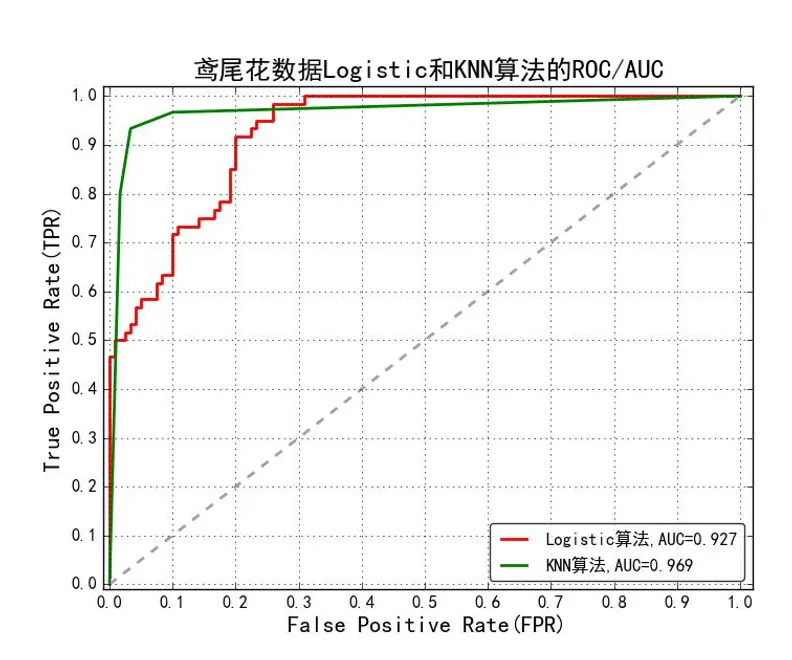 Note: AUC = ROC area; larger AUC → better model