Writing
Machine Learning Math Foundations (2) — Linear Algebra
Preface: linear algebra has many abstract topics; this note tries to connect them. Main objects: vectors, determinants, matrices, and systems of equations.
Preface: linear algebra has many abstract topics; this note tries to connect them—if not in one chain, then two. Main objects: vectors, determinants, matrices, and systems of equations.
Viewpoint
The core problem is solving systems of multivariate equations. Core ideas: inner product, rank, matrix inverse. Applications: linear regression, least squares via QR decomposition, SVD, PCA via diagonalizable matrices.
Vectors
-
Basics: a vector represents n independent properties (dimensions), often written with an arrow or as coordinates. Unit vector: magnitude 1. Inner (dot) product is a scalar:
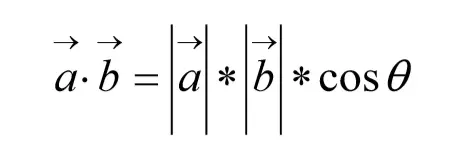 Orthogonal vectors: inner product zero.
 -
Applications: vector sets and eigenvectors
Matrices
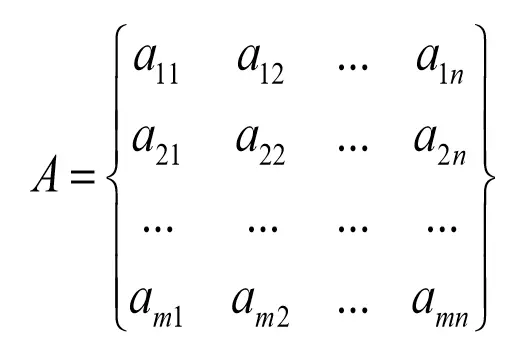
Definition: parameters describing linear relationships—a matrix is a linear map from some vectors to others. Y = AX maps X to Y; A describes the map. Y = AX appears often in linear dependence of vector sets. Intuition:
-
Matrices and vectors: when m = 1 or n = 1, A is a row or column vector.
-
Square matrices: negative matrix, upper/lower triangular, diagonal, identity. Determinant transforms use triangular form. Distinguish from unit vectors.
-
Matrix transpose
Determinants
A determinant is usually a scalar—a function measuring how a linear transform affects “area” or “volume.”
-
Determinant of a square matrix: n×n matrix A has |A| or det(A).
-
Cofactor: A_ij = (−1)^(i+j) M_ij
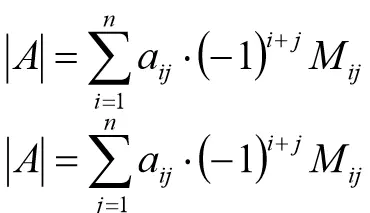 Adjugate matrix—for finding the inverse
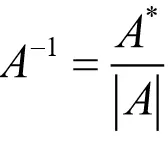
 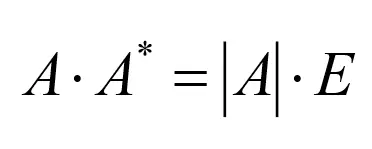 Square matrix inverse: if AB = BA = E, B is the inverse of A; A is invertible (nonsingular). Otherwise A is singular. Inverse denoted A⁻¹:
  ## Elementary matrix operations Row and column elementary transforms.
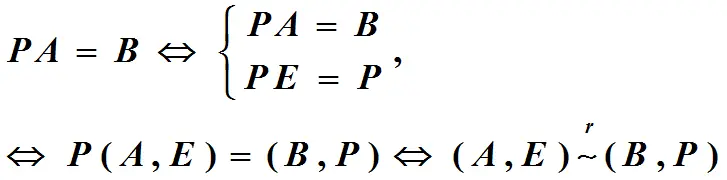
  Row echelon form, reduced row echelon, standard form—the former for variable relations, the latter for rank. Theorem (1): if A becomes B by elementary row ops, there exists invertible P with … How to find P?
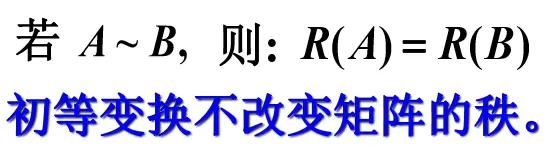
  Matrix rank: k-th order minor is a determinant
  ## Vector sets A vector set: a collection of finitely many row or column vectors of the same dimension.
  Linear representation of vectors:
  As a system:
  Similarly, if set B is representable by set A then:
  AX = B has a solution.
 -
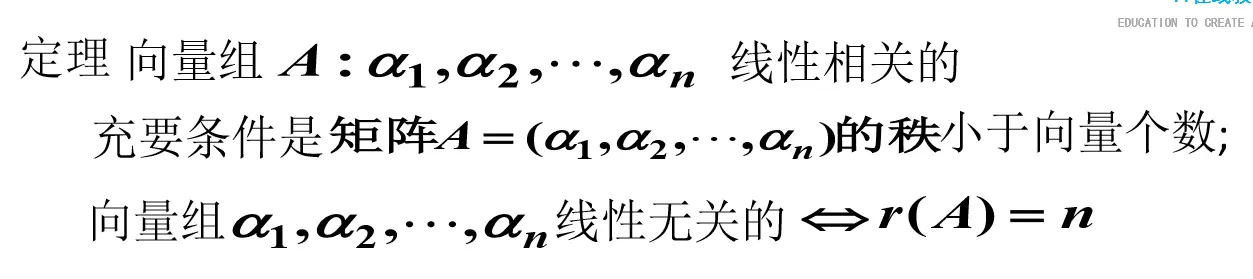
Linear dependence and independence:
 Use rank to test dependence:
  ## Linear systems Theorem 1: homogeneous Ax = 0 has nontrivial solutions iff R(A) … Positive definite matrix: if xᵀAx > 0 for all x ≠ 0, A is positive definite.
 -
Orthogonal matrix: n×n A with AᵀA = E is orthogonal (unitary over ℂ). Equivalent: columns (rows) are unit vectors and pairwise orthogonal.
QR Decomposition (Orthogonal–Triangular)
For m×n column-full-rank A:
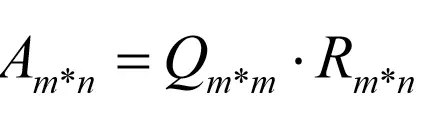
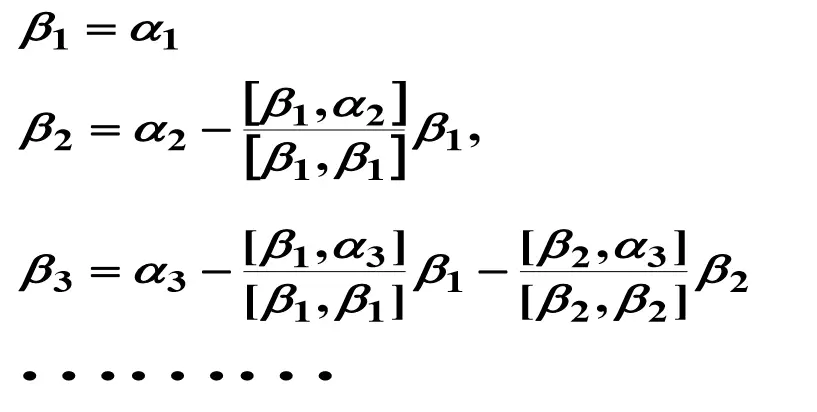
Uses Gram–Schmidt orthogonalization:
Singular Value Decomposition
Generalizes symmetric eigen-decomposition to arbitrary matrices.

Corresponding to eigenvalues/vectors: diagonal entries of Σ are singular values; U and V are left/right singular vector matrices.
-
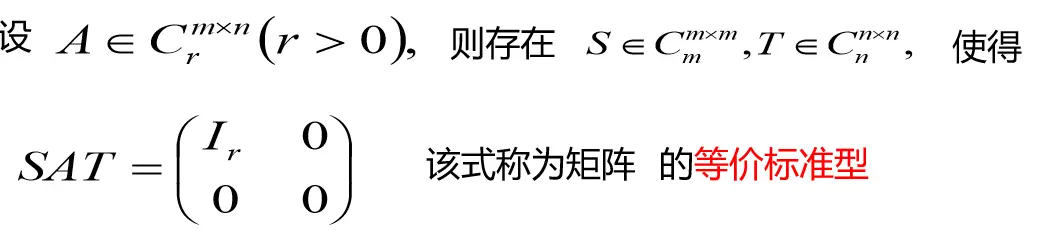
Equivalence canonical form:
-
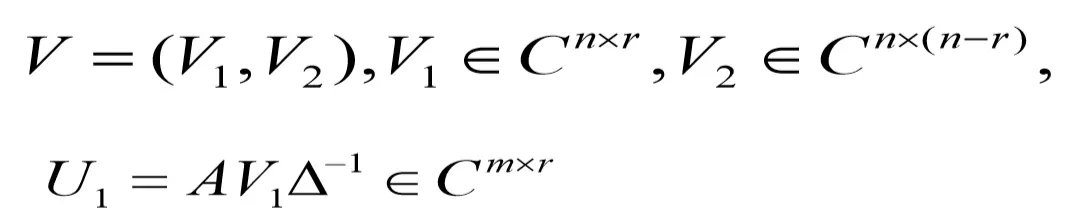
Steps: eigenvalues/vectors; eigenvectors form V₁, compute U₁:
Derivatives of Vectors
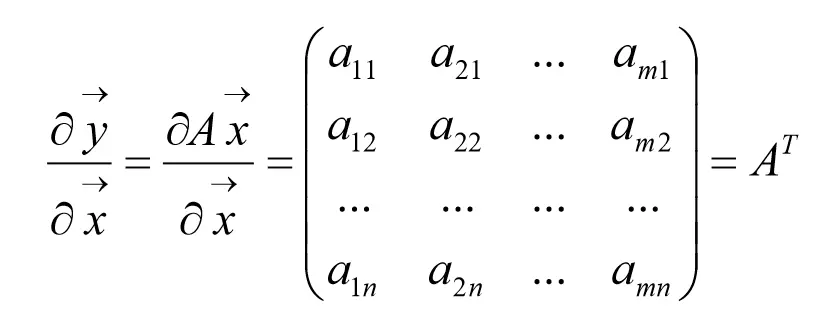
A is m×n, x is n×1 column vector; Ax is m×1.
-
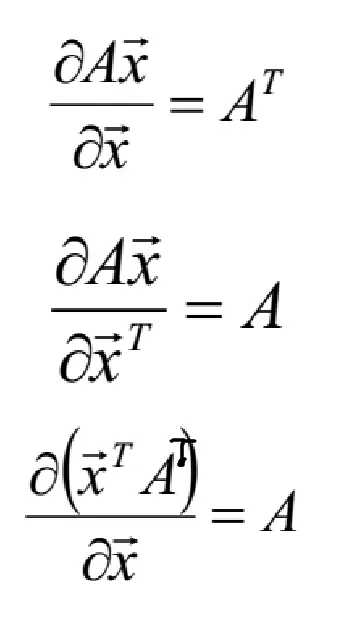
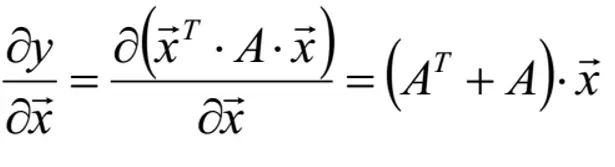
Partial derivative formulas:
-
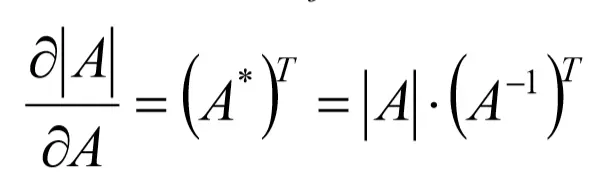
Scalar w.r.t. matrix:
 Postscript: Still learning—slow updates; we improve together.
You might also like: my NumPy notes for ML, my matplotlib notes for ML, my calculus notes for ML