Writing
Several Questions About Knowledge Graphs
Why knowledge graphs matter for AI, NLU, business value, and advantages over traditional ML.
- Why are knowledge graphs so important for machine intelligence?
-
Knowledge graphs enable two core abilities for machine cognitive intelligence: “understanding” and “explanation.”
-
Machine understanding of data is essentially mapping from data to knowledge elements (entities, concepts, relations) in a knowledge base.
-
Linking knowledge-base knowledge to questions or data. With a knowledge graph, machines can reproduce our understanding and explanation process.
- Why does natural language understanding need knowledge graphs?
-
Human language understanding rests on human cognition; background knowledge from lived experience supports understanding. We understand each other’s language like inferring the mass of an iceberg from the tip above water. We understand naturally because we share similar experience and education—similar background knowledge. That background lets us understand a few surface tokens.
-
Different background knowledge leads to different humor. Language understanding needs background knowledge; without it, understanding is impossible. Machines must share background knowledge similar to ours.
-
Background knowledge for machine NLU must be large-scale, richly semantic, well-structured, and high quality.
-
The path from NLP to NLU passes through knowledge—expressed as NLP + KB = NLU.
- Why do knowledge graphs have strong business prospects?
-
They address what deep learning cannot explain—e.g., recommendation without explanation; knowledge graphs add explainability and business value.
-
Explaining concepts and automatic storage are foundations for machines eventually surpassing humans.
-
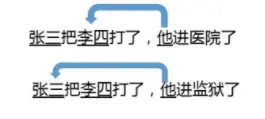
Users grow dissatisfied with purely statistical models; statistical gains hit a ceiling. Breaking it needs knowledge guidance. Tasks like entity coreference are hard without knowledge. Knowledge is indispensable in many tasks. A pragmatic approach deeply combines both.
 4. Advantages over traditional machine learning?
 -
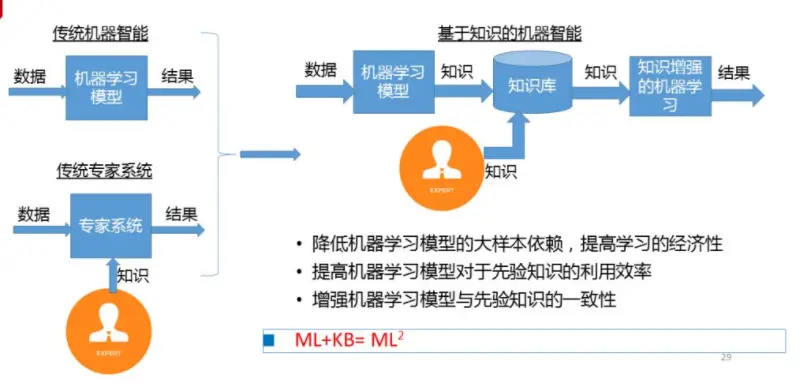
Enhances machine learning. The gap between machine and human learning is that humans have and use knowledge effectively. Future ML gains will also rely on knowledge.
-
Knowledge will become a more important asset than data. In the big-data era people said “whoever has data rules.” Shen Xiangyang at Microsoft Research said “whoever masters language rules.” I have argued machines need background knowledge to master language—so “whoever has knowledge rules.” Knowledge is the power in AI.